



With securities lending and derivatives you can vote at a meeting with nothing to lose, or gain if the company fails. The Mylan, CSX, Windstream and Hovnanian cases and what they mean for investors.
When a company is in trouble, some lenders strike a deal with it to jump ahead of the others. The J.Crew and Serta cases, two courts with two answers and what it means for bond ETF holders.
Vulture funds buy the debt of troubled companies at a discount to take them over. How loan-to-own works, the Kmart and Argentina cases and why small shareholders pay the bill.
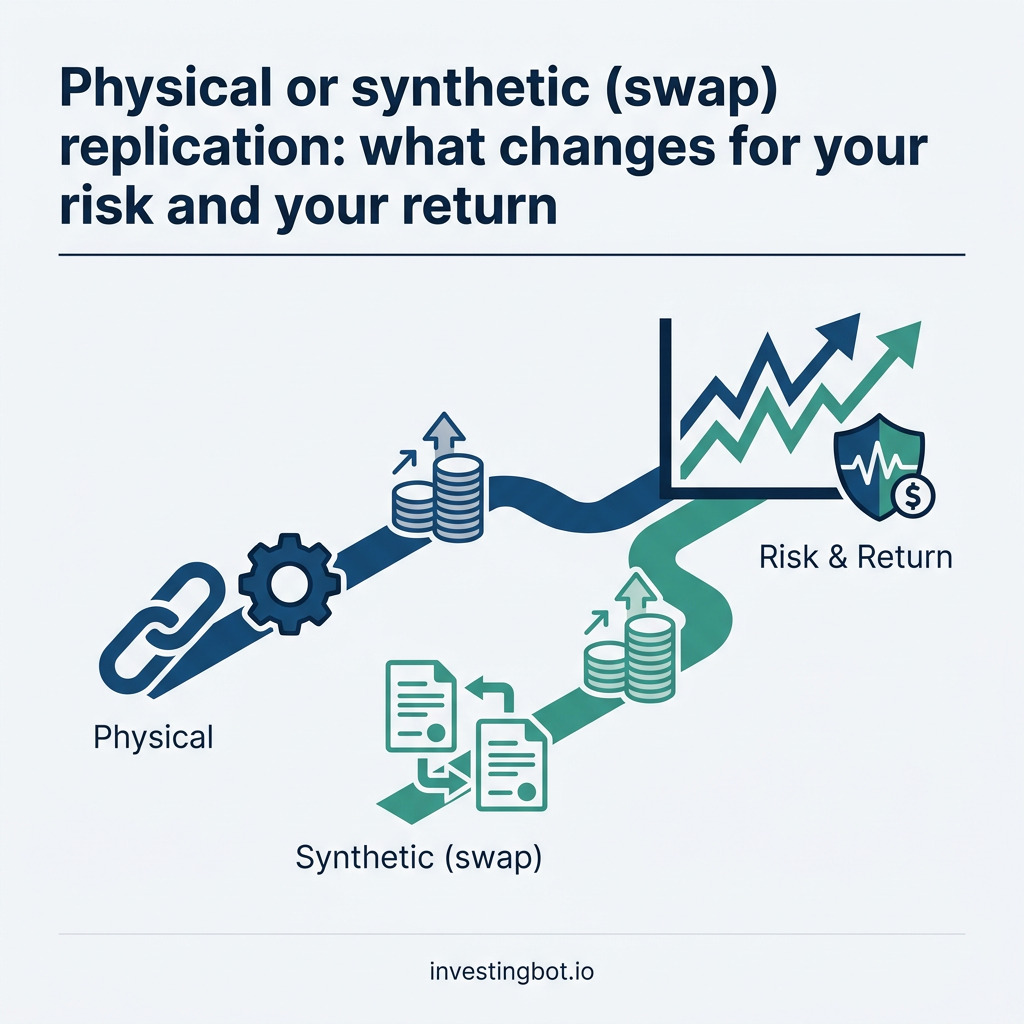
A synthetic S&P 500 ETF returned more than a physical one in every year from 2018 to 2025. Where the advantage comes from and how much counterparty risk weighs, on our data.
US IPOs from 2021 to 2023 still listed lost a median of 77.7% over three years, while the market rose 34.6%. What the research says and why many investors wait.
A 60/40 portfolio left alone since 2002 is now 90.9% stocks. How often to rebalance and how to do it with as few sales as possible, on 24 years of data.
In the 10 worst S&P 500 sessions since 1998, all nine sectors fell together. Why correlation rises in crashes and what really protects a portfolio.
Free cash flow counts real money, not accounting estimates. Among 1,885 US companies, one in ten profitable ones burned cash, and in 95 stock-based pay exceeds it.
Beta tells you how much a stock follows the market, not how far it can crash. In our data, 342 of 894 low-beta US stocks lost more than 30% in a year.
Monte Carlo tests your plan against thousands of possible futures. In our data, one point less of return lowers the probability of success from 81% to 73%.